
A model that hundreds of millions of people could use on Friday morning was gone by Friday night, and the company that built it didn't make that call.
On 12 June 2026, Anthropic disabled Claude Fable 5 and Claude Mythos 5 for every user after receiving a US government export-control directive. According to Anthropic's own statement, the order arrived at 5:21pm Eastern, cited national security authorities, and required the company to suspend all access to both models. Access was switched off within hours. Every other Claude model kept running.
This is the first time a frontier AI model deployed to the public has been pulled by government order rather than company choice. For developers and businesses, it raises an awkward question that has nothing to do with benchmarks: what happens to your work when the model underneath it can disappear overnight? There's also a quieter point that matters for anyone whose website is read by AI, and we'll come to it, because the part of Claude that reads your site was never touched.
Update, 1 July 2026: access restored
- The suspension described below lasted eighteen days. On 30 June 2026 the US Commerce Department withdrew the export-control directive, and on 1 July Anthropic redeployed Fable 5 and Mythos 5 globally, UK included, across Claude.ai, Claude Code, and the API. Fable 5 is included for up to 50% of weekly usage limits through 7 July on Pro, Max, Team, and selected Enterprise plans, then moves to usage credits. Anthropic also added a safety classifier targeting the reported jailbreak and, with Amazon, Microsoft, and Google, proposed an industry framework for scoring jailbreak severity. The record below stands as written on 12-13 June; this update adds the resolution.
Key points
- What happened: The US government ordered Anthropic to suspend Claude Fable 5 and Mythos 5 on 12 June 2026. Anthropic complied within hours.
- Why: An export-control directive citing national security, reportedly over a method of jailbreaking Fable 5 to analyse code for flaws.
- Scope: Only these two models. Opus 4.8, Sonnet, and Haiku are unaffected.
- Anthropic's view: It is complying but disagrees, calling the concern a narrow potential jailbreak available in other models too.
- For websites: Claude's crawlers (ClaudeBot, Claude-User, Claude-SearchBot) keep running. Your AI visibility is unchanged.
What happened
The sequence was fast. Anthropic says the directive landed at 5:21pm ET on 12 June. The letter, reportedly signed by US Commerce Secretary Howard Lutnick, framed the suspension as an export control: it prohibits access "by any foreign national, whether inside or outside the United States," and that wording extends even to Anthropic's own overseas employees. As 9to5Mac reported, it also requires licences for exporting or transferring the models.
Rather than attempt to filter access by nationality in real time, Anthropic disabled both models for everyone. That is why a paying subscriber in Manchester lost Fable 5 at the same moment as a developer in California. The company chose total compliance over a partial measure it could not guarantee.

The jailbreak justification
The directive did not spell out the national security concern. Anthropic's reading is that the government believes someone discovered a way to bypass Fable 5's safeguards by asking it to read source code and point out flaws. The company describes this as a narrow potential jailbreak, and argues the same capability is already available elsewhere.
"We disagree that the finding of a narrow potential jailbreak should be cause for recalling a commercial model deployed to hundreds of millions of people."
What stays with me about that sentence is the gap it describes. The capability to read code and spot weaknesses is the same skill every security team relies on, and Anthropic says it is "used every day by the defenders who keep systems safe." A model good enough to help defenders is, by the same token, good enough to worry a regulator. That tension isn't new. What's new is a government acting on it by reaching into a live product and switching it off. Two months ago we wrote that Anthropic withheld Mythos because it could find exploits on its own. The state has now drawn a harder line than the company did.

An independent record of the shutdown
Because the change happened so quickly, the clearest public record of it came not from a press release but from a developer watching his own API calls fail. Simon Willison, who had spent the previous days putting Fable 5 through its paces, logged the exact moment it went dark.
"Well this is nuts:"
Three words, and they fit. Willison's post pins the cutoff to 6:59pm Pacific, with the raw 404 error logged as the model stopped answering. I find that detail more telling than any official statement. He had been documenting a model that, days earlier, he called the most capable he'd tested, and the same monitoring script that tracked its strengths recorded its disappearance. The story of Fable 5 went from "the challenge is finding tasks it can't do" to a 404 in under a week. That's the speed worth sitting with.
What is, and is not, affected
The blast radius is narrow and worth stating plainly, because early coverage blurred it. Two models went offline: Claude Fable 5, the public flagship released on 9 June, and Claude Mythos 5, the restricted partner model. Everything else Anthropic runs stayed up. Claude Opus 4.8, Sonnet, and Haiku continued to serve the apps, Claude Code, and the API without interruption.
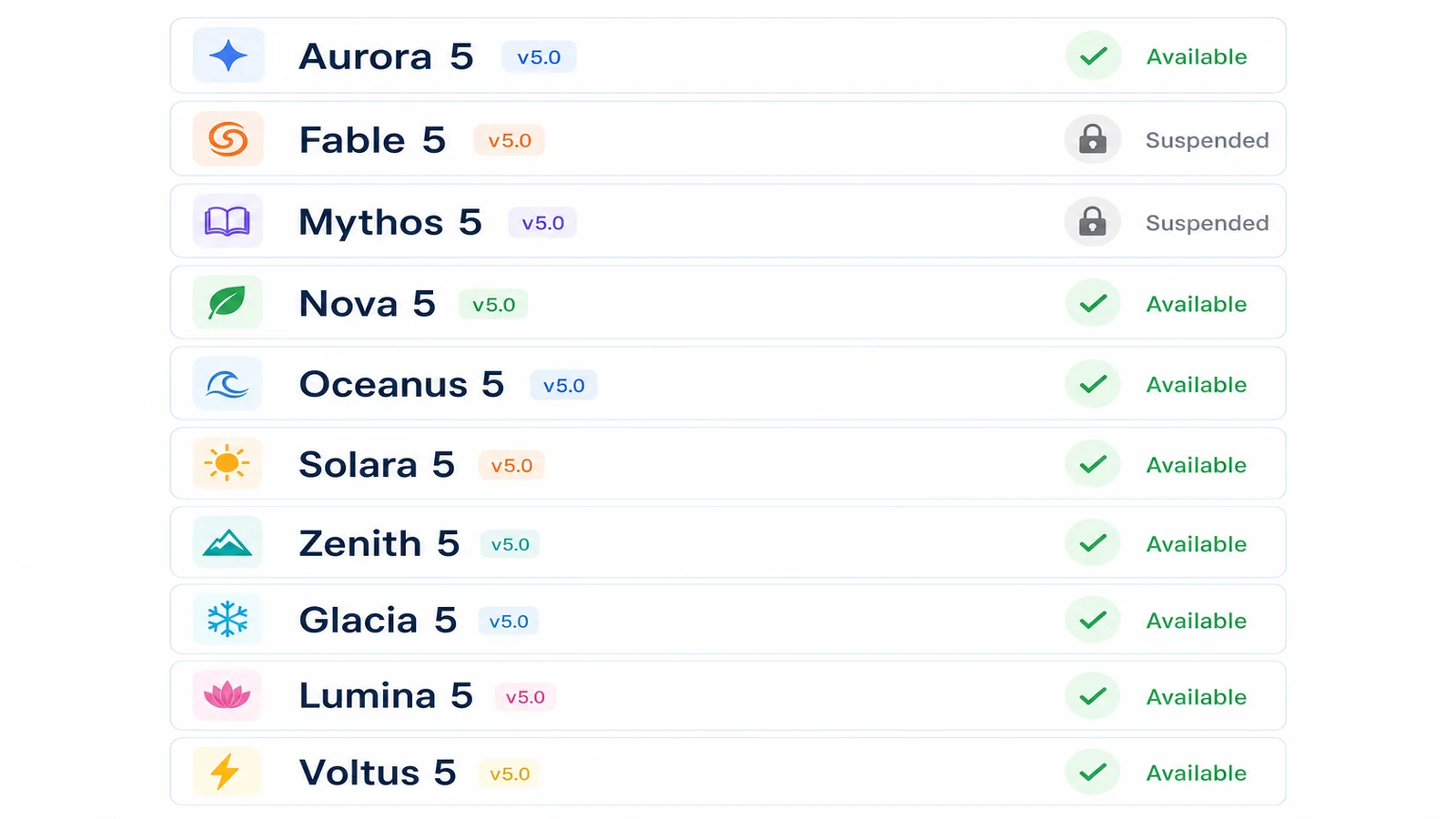
If you were using Fable 5 in Claude Code during its free launch window, that access ended abruptly. The practical fix is the model picker: switch back to Opus 4.8, which handled most coding work well before Fable arrived and still does. (Since 24 July 2026 the better fallback is Claude Opus 5, which sits at the same price as Opus 4.8.) Anyone who had built Fable 5 into an automated pipeline via the API would have seen calls start failing at the cutoff, with no warning and no grace period.
How we got here
This isn't the first time these models have caused a policy argument. Back in April, Anthropic built Claude Mythos and then declined to release it to the public, because it could discover and chain zero-day vulnerabilities without help. We covered that decision in our explainer on the withheld model, including OpenAI chief executive Sam Altman's jab that the whole thing read like "fear-based marketing".
Fable 5 was meant to be the answer to that worry: the same intelligence, with the offensive security capability fenced off behind classifiers that route restricted requests to Opus 4.8. Anthropic released it on 9 June as the safe, public version of a model it had deliberately held back. Three days later, the government decided the safe version wasn't safe enough. The escalation from "company withholds a model" to "state recalls a shipped model" took about eight weeks.
What it means for your website
Here's the reassuring part, and the reason this story matters on a site about AI visibility. The directive suspended the models people talk to. It did nothing to the crawlers that read websites. ClaudeBot, Claude-User, and Claude-SearchBot are separate infrastructure, and they kept fetching pages and parsing llms.txt, developer-ai.txt, and the rest of the AI Discovery Files throughout. Your site's discoverability by Claude did not change for a second.
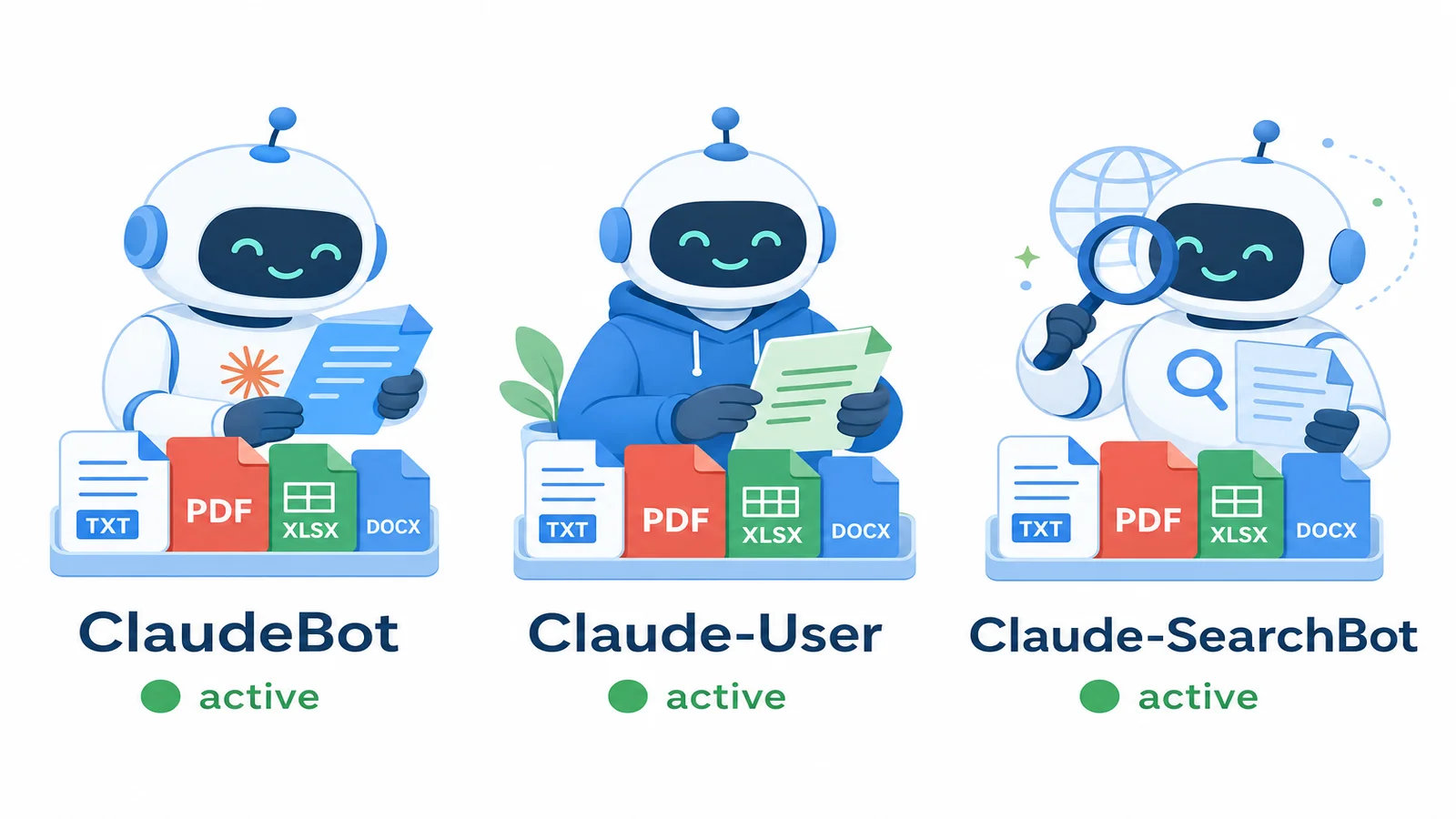
That split is the whole point of building on durable infrastructure rather than chasing a model. Which model writes the answer changes constantly: a new flagship one week, a government recall the next. What an AI system can find out about you, and how clearly, is decided long before any model is picked. It lives in your pages, your structured data, and your machine-readable identity, and it survives whichever model happens to be live. We explain that retrieval-first reality in how AI search actually works, and the principle behind it on the AI Visibility Checking definition. The job of the discovery layer is to keep your identity consistent and reachable no matter what sits on top of it. Once the files are in place, you can register your site in the AI Visibility Directory so the implementation is on record.
What to watch
Anthropic says it is working to restore access and will share more, but it has given no date, and it can't, because the decision rests with the government rather than the company. Watch for three things: whether the directive is narrowed or lifted, whether other frontier providers receive similar letters (the precedent would reach all of them), and whether export-control logic that targets models today ever extends to the crawlers and tools that read the open web. That last one is the version of this story that would land squarely on AI visibility, and it hasn't happened.

For now, the takeaway is calm. If you used Fable 5, switch to Opus 4.8 and carry on. If you build on the API, treat single-model dependencies as the risk this week proved them to be. And if your concern is whether AI systems can find and understand your business, nothing changed: the crawlers still came, and the files they read are still the thing worth getting right.
The resolution: the first of those three things to watch happened fast. On 30 June the Commerce Department withdrew the directive, and on 1 July Anthropic redeployed both models alongside a new safety classifier and a proposed cross-industry framework, built with Amazon, Microsoft, and Google, for scoring how serious a jailbreak really is. The precedent still stands, though: a shipped frontier model was switched off and back on by government order inside three weeks. The lesson for anyone building on a single model, or relying on a single model to find their business, is unchanged. Own the parts you control.
The models change weekly. Your AI visibility shouldn't.
Fable 5 vanished overnight, but the crawlers that read your site kept running. Check what AI systems can actually reach and understand on your domain with the 365i AI Visibility Checker, then make your identity machine-readable with the quick-start guide.
Check your AI visibilityThat is the practical reassurance here: your files do not care which model is switched on. Whichever one a customer is using, it reads the same declarations, which is why publishing them beats optimising for whichever assistant happens to be popular this quarter. Our done-for-you setup pack handles the whole set if you would rather not.
Frequently asked questions
Why did Anthropic suspend Claude Fable 5 and Mythos 5?
Anthropic did not choose to. On 12 June 2026 it received a US government export-control directive, citing national security authorities, ordering it to suspend access to both models. Anthropic says it is complying with the legal order while disagreeing with it, and is working to restore access.
What reason did the US government give?
The directive did not spell out the national security concern in detail. Anthropic's understanding is that the government believes someone found a way to bypass, or "jailbreak", Fable 5 by asking it to read code and identify flaws. Anthropic calls this a narrow potential jailbreak and notes the same capability is available from other models, including GPT-5.5.
Are other Claude models still available?
Yes. Anthropic's statement says access to all other models is unaffected. Only Claude Fable 5 and Claude Mythos 5 were suspended. Claude Opus 4.8, Sonnet, and Haiku continue to run normally in the apps, Claude Code, and the API.
Does this affect how AI reads my website?
No. The suspension hit the models people chat with, not Anthropic's web crawlers. ClaudeBot, Claude-User, and Claude-SearchBot keep fetching pages and reading AI Discovery Files as before. Your site's discoverability by Claude is unchanged.
When will Fable 5 and Mythos 5 come back?
They already have. On 30 June 2026 the US Commerce Department withdrew the export-control directive, and on 1 July Anthropic redeployed both models globally, UK included, across Claude.ai, Claude Code, and the API. Fable 5 is included for up to 50% of weekly usage limits through 7 July on Pro, Max, Team, and selected Enterprise plans, then moves to usage credits. The suspension lasted eighteen days.
What is the difference between Fable 5 and Mythos 5?
They share the same underlying model. Claude Fable 5 is the public release with cybersecurity and biology guardrails switched on. Claude Mythos 5 keeps the offensive security capability and went only to vetted partners through Project Glasswing. We explained the withheld model in our Claude Mythos guide.
Can foreign nationals still use these models?
The directive is framed as an export control that suspends access for any foreign national, inside or outside the United States, including Anthropic's own overseas staff. In practice Anthropic disabled both models for everyone to ensure compliance rather than try to filter by nationality.
Should I move my work off Claude because of this?
For most people, no. Opus 4.8 and the other models are running normally. The wider lesson is to avoid hard-wiring any single model into a workflow you cannot change quickly, and to keep the parts you control, such as your website and its machine-readable identity, independent of which model is live this week.
Sources
- Statement on the US government directive to suspend access to Fable 5 and Mythos 5 - Anthropic
- Redeploying Claude Fable 5 - Anthropic (1 July 2026)
- Anthropic says Trump admin has lifted export controls on Claude Fable 5 and Mythos 5 - CNBC
- US government directive to suspend access to Fable 5 and Mythos 5 - Simon Willison
- Anthropic pulls Claude Mythos 5 and Claude Fable 5 following US government directive - 9to5Mac
- Anthropic suspends new AI models after government directive - NBC News
- Anthropic disables access to Fable 5 and Mythos 5 to comply with government directive - CNBC